
More Buildings, More Places to Live

A large house with outbuildings gives mice a choice of homes. A garage with stored boxes, a potting shed with seed trays, a pool house nobody uses in winter or a workshop full of offcuts can each hold a colony that treats the main house as somewhere to forage. Deal with the house alone and the mice move back in from the garden.
Where there is heathland or woodland close by, as there is round much of this corner of Berkshire, wood mice are part of the picture as well as house mice. Wood mice live outdoors most of the year but readily come into sheds and garages, and from there into the house, particularly as the weather turns.
Garages and the Door Into the House
A garage is the most common link between outbuildings and the home. Up-and-over and roller doors rarely seal at the edges or along the bottom, and the garage is usually full of cardboard, old furniture and bags of things mice can nest in or eat.
- Check the bottom and sides of the garage door for daylight showing through.
- Look along the wall where the garage joins the house, especially where pipes or cables pass through.
- Check the door from the garage into the house; a bristle strip on the bottom closes a gap that is easy to miss.
- Move stored food, bird seed and grass seed into metal bins with lids.
Garages built into newer houses have their own routes through boxed pipes and service voids, covered on the Thatcham page.
Sheds, Stores and Stables
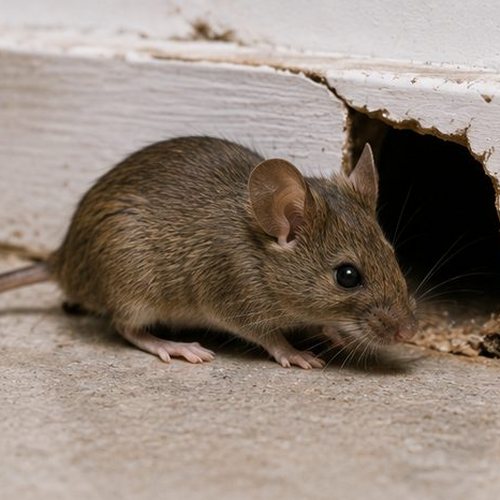
Anything stored outdoors attracts mice if it is dry and undisturbed. Garden furniture cushions, dust sheets, sacks, stacked plant pots and log piles all make good nesting. Feed for birds, chickens or horses is the bigger draw, because it is food in quantity, often kept in the bag it came in.
The one thing that matters most outside: food. Keep bird seed, animal feed and grass seed in metal bins with tight lids. A split sack in a shed can feed mice for a whole winter.
Properties with fields, paddocks or feed rooms are covered in more detail on the Pangbourne page.
How a Larger Property Is Surveyed and Treated
The survey takes in every building where mice might be living, not just the rooms where droppings were found. That means walking the outbuildings, looking at how each connects to the house, and working out where the main activity is. It helps to tell us before the visit what buildings there are and whether any are locked or let.
Bait stations outdoors are locked and tamper-resistant and fixed in place, and they go where mice travel, often along walls and in corners of outbuildings. Tell us about dogs, cats, horses, chickens and any children who play in the grounds, because it affects where treatment can go. Follow the instructions given on the day.
Mice control is a fixed £260, confirmed before anything is booked. On a larger property it is especially worth asking what the treatment involves, including the visits and any proofing, and that is explained before you commit.
Keeping the Outbuildings Clear Afterwards
Once activity has stopped, the house can be proofed and the outbuildings tidied so they are less inviting. Clear clutter off floors, lift stored items onto shelves, and check doors and vents each autumn. If mice return after treatment, a garage or shed is one of the first places to look, and why do mice keep coming back explains the others.