
What Mice Actually Sound Like
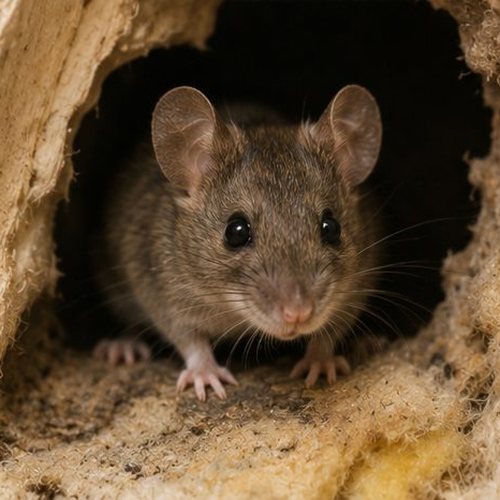
Mice are light, so the sound is light too: a quick patter, a dry scratching, a rustle in loose insulation, sometimes a faint gnawing that stops and starts. It tends to move. You hear it at one end of the ceiling and a moment later somewhere else, because a mouse runs short distances, pauses, then runs again.
Timing is the other clue. Mice are most active once a house has settled for the night, and again in the small hours. People often notice it first in a bedroom, simply because that is where they are lying still and listening. Sounds that begin as the heating comes on and stop when it clicks off are more likely to be pipes expanding and cooling than anything alive.
Working Out Where the Sound Is Coming From
The noise is rarely right where the mice are living. It is where they are travelling. Ceiling voids, the gap under floorboards, the hollow behind a stud wall and the boxing round pipes all act as corridors between a nest and whatever food they have found.
- Above a bedroom ceiling: usually movement across the joists between the eaves and the loft hatch or water tank area.
- Inside an outside wall: often a route from ground level up through the cavity, or along a pipe run.
- Under the floor of a downstairs room: typically the path between an entry point and the kitchen.
- Behind kitchen units: mice feeding, which is the spot most likely to have droppings to confirm it.
A simple night log helps a great deal. Jot down which room, roughly what time and what it sounded like for three or four nights. Then look in daylight at the rooms below and beside it for droppings along skirting, in the backs of cupboards and behind the cooker.
Mice, Rats, Squirrels or Something Else

Heavier thumps, a sound like something being dragged, or noise that makes you think of a much bigger animal point away from mice. Telling those apart properly is covered in our guide to scratching noises in walls and lofts, so we will not repeat it here. Activity mainly in the early morning in the loft is a pattern more typical of squirrels. If what you find downstairs are large droppings rather than small ones, our page on whether it is mice or rats will help.
The one thing that settles it: the sound tells you something is there, but droppings tell you what. Small, dark, rice-sized droppings with pointed ends near where you hear the noise are mice. Look before you ring and tell us what you found.
Stopping the Noise Means Dealing With the Mice
There is no treatment for a sound. The noise stops when the mice using that route are gone and the way they came in is closed. We place bait stations or traps on the runs, which in a noisy ceiling usually means the loft and the void edges, and check the house for how they are getting up there.
Be ready for it to fade rather than cut out. Mice feed in many small bites and wander widely, so the scratching tends to become less frequent over days to weeks. Where a mouse dies out of reach in a void there can be a smell for a while afterwards, and we would rather tell you that now than have it come as a surprise.
The price is a fixed £260, confirmed before anything is booked. What the treatment involves, including visits and any proofing, is explained to you before you book too, and homes across Newbury are handled the same way.