
Why Mice Come Inside When It Turns Cold

Through spring and summer, plenty of mice live perfectly well outside: in hedges, gardens, field margins, compost heaps and sheds. Food is easy to find and nights are mild. Once temperatures drop and the food outdoors thins out, a house becomes the obvious place to be.
A home offers three things at once: warmth coming through walls and floors, dry shelter in voids and lofts, and a steady supply of food. House mice move in and so, especially where gardens run into hedgerows or fields, do wood mice. For a riverside town with gardens and countryside round it, Henley-on-Thames sees the same seasonal pattern as anywhere else.
What It Looks Like When It Starts
The first sign is usually the sound of them after dark in a ceiling or a wall, or a few droppings in the back of a kitchen cupboard. Often it is a garage or shed first, where stored apples, bird food or dog biscuits have been found. A gnawed packet in the larder a week later means they have moved on into the house.
The whole-house list of what draws mice in is in our article on what attracts mice. The point here is timing: the same house that had no visitors in July can be an easy target by November.
What to Do Before the Weather Turns
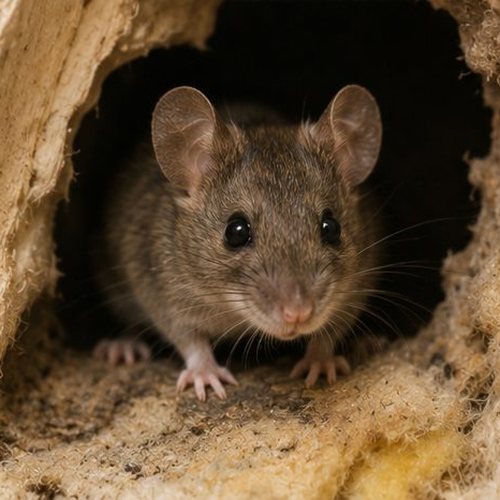
Late summer is the time to look, while it is still pleasant to walk round the outside of the house. A few jobs make a real difference.
- Walk the outside walls and look for gaps round pipes and cables, and doors that do not meet the threshold.
- Check that airbricks have their grilles. Never block them, because they ventilate the floor, but a fine metal mesh keeps mice out.
- Move bird seed, pet food and stored produce in the garage or shed into metal bins with lids.
- Clear clutter piled against the house walls, which gives cover right beside an entry point.
- Take feeders down or move them away from the house if spilled seed collects near the walls.
The thing to get right: an autumn mouse does not leave in spring. Once inside with food and shelter, mice stay all year and breed, so act on the first signs rather than waiting for the weather to warm up.
Once They Are Already In
Mice breed quickly: several litters a year, with young that are breeding themselves within weeks. A couple that arrive in October can be a household by the new year. That is why early treatment is easier than late treatment.
Treatment means bait stations or traps on the runs, a search for the ways in, and sealing those once the mice inside are dealt with. The price is a fixed £260, confirmed before anything is booked. What the treatment involves, including visits and any proofing, is explained before you book. Keeping them out in the years that follow is covered in our prevention routine, and there is more on the season itself in our winter pests advice.