
Why the Route Matters More Than the Mouse
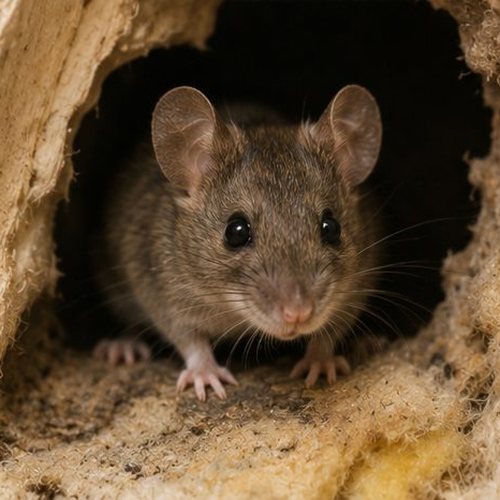
A house with a way in and food inside will be found again. Trap every mouse in the kitchen and leave the gap under the back step open, and the next ones arrive on the same path within weeks, sometimes days. That is why tracing the entry point is part of any proper treatment rather than an extra.
The hole itself is usually small and unremarkable. A mouse gets through a gap roughly the width of a pencil, about 6mm, so you are not looking for anything dramatic. You are looking for a gap that is used, which is a different thing from a gap that exists.
Work Backwards From the Evidence
Start where the signs are heaviest, not where you think the entry ought to be. Mice keep to the same runs, hugging walls and the backs of units, so the droppings, grease marks and gnawing form a trail that points back towards where they come in.
- Find the busiest spot: the cupboard or corner with the most droppings or the worst gnawing.
- Follow the wall line away from it in both directions with a torch held low, so smears and droppings throw a shadow.
- Pull out anything that stands against that wall: the cooker, the washing machine, the kickboard under the units.
- Note every pipe, cable or duct that goes through the wall or floor along that line. Those are your candidates.
- Check the same wall from the other side, outside or in the next room, at the same height.
Kickboards deserve particular attention. The void behind the plinth under fitted units is dark, warm and undisturbed, and the pipework that enters the kitchen usually runs through it. Most clip off; a phone camera pushed into the gap will show you droppings long before you could see them by eye.
Test a Suspect Gap Before You Fill It

When you think you have found it, prove it. Dust a thin layer of flour or talc on the floor in front of the gap and look the next morning. Tiny footprints and a tail drag mean it is live. A clean surface after several nights means it is probably not the one.
A loose ball of tissue pushed lightly into the hole does the same job: if it has been moved or shredded overnight, something is using it. Neither test takes long, and both stop you spending a weekend sealing the wrong hole.
Do not seal it yet. Blocking a live route while mice are still inside traps them in the house. They either chew a new way out, often somewhere worse, or die in a void where you cannot reach them. Mark the gap, tell us about it, and seal it once the mice inside are dealt with.
The Places People Miss
The kitchen gets checked first and the rest of the house gets forgotten. Some routes that regularly go unnoticed:
- The gap round the gas pipe or the soil pipe where it passes through an outside wall, often hidden behind a boxed-in cover.
- The hole left where an old boiler flue, cooker hood vent or tumble dryer vent was removed.
- Under the threshold of a back door or a garage door that no longer meets the floor.
- The joint between an integral garage and the house, where services cross into the utility room.
- Airbricks with broken or missing grilles. The grille needs replacing with a mesh cover, not the airbrick blocking.
For a room-by-room list of the ways mice commonly get into a house, see how mice get into houses. Once you know the route, how to mouse-proof your home covers which materials hold and which get chewed straight through.