
Before You Seal Anything
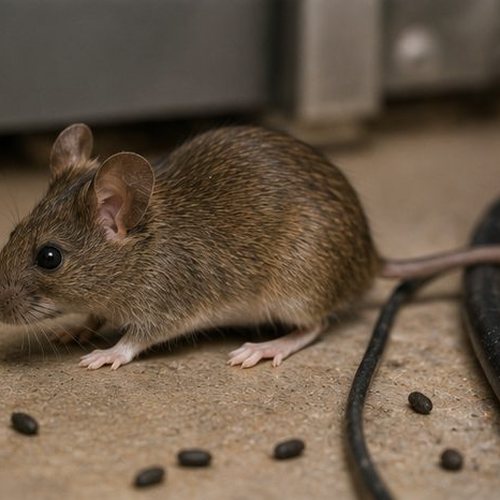
Sealing is the last step, not the first. If mice are still living inside when you close their way out, one of two things happens: they die in the walls or under the floor, where they can smell for a while, or they chew a new exit, often somewhere worse than the one you blocked.
So seal only once the mice inside have been dealt with, or seal the outside while treatment inside is already covering the areas they would retreat to. If you are having a treatment, ask when proofing should happen; it is part of what is explained before booking.
This page assumes you already know where the gaps are. The list of common routes in covers what to look for, and tracing the route on your own property covers how to find the one being used.
Materials That Work
A mouse can get through a gap about the width of a pencil, roughly 6mm, and it will gnaw at the edges of anything soft to make a gap bigger. A good seal is hard, fills the whole hole, and has nothing loose to get teeth into.
- Wire wool with filler. Pack the gap tightly with coarse wire wool or a copper or stainless mesh scourer, then cover it with exterior filler or sealant. The wire stops the gnawing; the filler holds it in and keeps it neat. Good round pipes and cables.
- Mortar or sand and cement. For holes in brickwork, gaps at the base of walls and old pipe holes that are no longer used. Hard, lasting and simple to do.
- Metal mesh. Fine galvanised mesh over vents, weep holes and the open ends of pipes. It keeps air moving while keeping mice out.
- Door brushes and bristle strips. For the gap under an external door or a garage door. Stiff bristles close the gap without stopping the door.
- Metal kick plates. On the bottom of a door, or over a timber edge that has already been gnawed, so there is nothing to chew.
Never block an airbrick. Airbricks ventilate the space under a suspended timber floor, and blocking them can lead to damp and rot. Fit fine metal mesh over the face instead, so air still passes and mice do not.
Materials That Do Not
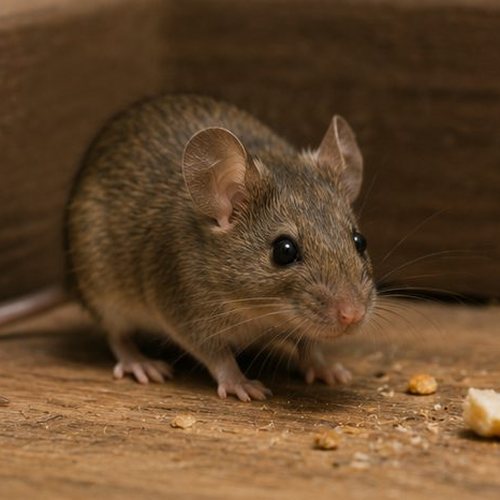
- Expanding foam on its own. It fills a gap nicely and mice chew straight through it. Use it only as a backing, with wire wool pushed into it and a hard finish over the top.
- Plastic. Plastic covers, vents and plugs are gnawed. Swap them for metal where a route is in use.
- Cardboard, wood offcuts and rags. Stuffed into a hole as a stopgap, these become nesting material within days.
- Silicone or caulk alone. Fine for a hairline crack, but not across a gap a mouse is already using.
If a mouse can get its teeth into it, it is not a seal. Soft materials make a hole look closed. Wire and a hard filler make it closed.
Doors, Garages and the Places People Miss
Garage doors are the biggest single gap on many houses. An up-and-over door rarely meets the floor evenly, and a rubber seal along the bottom, or a brush strip on a side door, closes a gap mice walk straight under. The door between the garage and the house matters as much, and a brush strip there is worth fitting even if the garage itself stays open.
Inside, the gaps behind kitchen kickboards and round the pipes under a sink or behind a washing machine are worth sealing too. They do not keep mice out of the building, but they cut off their best routes from the voids into the rooms.
When It Needs a Builder
Some gaps are more than a tube of filler. Call a builder or roofer for:
- Gaps at the eaves, soffits and fascias, or where a roof meets a wall — working at height is not a DIY job.
- Crumbling mortar across a wide area, or holes in a cavity wall where the gap runs deep.
- Broken airbricks that need replacing rather than covering.
- Damaged drains or sewer pipes, which is usually a rat question — see the rat page.
If you would rather we looked at the whole picture, ring 0118 336 1366.