
What You Are Actually Cleaning Up
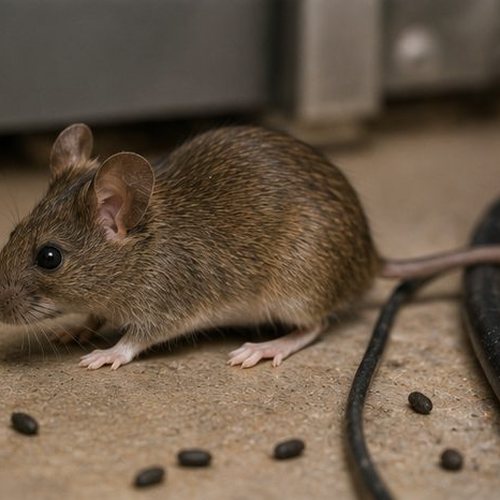
Mouse droppings are small, dark and about the size of a grain of rice, with pointed ends. They turn up in scattered lines rather than piles, because mice go as they move. Alongside them there is urine, which you mostly cannot see, and grease from their fur that leaves grey smears on the edges they brush past.
Between them, droppings and urine contaminate whatever the mice walk over, and they can carry bacteria such as salmonella. In some people the proteins in mouse urine trigger allergies or asthma. None of that is a reason to panic, but it is a good reason to clean carefully. The wider picture is in are mice dangerous to your health.
How to Clean Droppings Safely
The single most common mistake is reaching for the vacuum cleaner or a dustpan and brush. Dry droppings break up, and sweeping or vacuuming them throws fine dust into the air where you breathe it. Wet them first, always.
- Put on rubber or disposable gloves. Open a window if the space is enclosed.
- Spray the droppings and the area round them with household disinfectant, or a bleach solution made up as the bottle says, and leave it to soak for a few minutes.
- Wipe everything up with paper towel and put it straight into a plastic bag. Tie the bag and put it in the outside bin.
- Wipe the whole surface again with fresh disinfectant, including shelf edges and the sides of the cupboard.
- Take the gloves off inside out, bin them or wash them, then wash your hands thoroughly with soap and warm water.
Wet it, never sweep it. Soaking droppings with disinfectant before you touch them keeps the dust down. That one habit matters more than which cleaning product you use.
Food, Worktops and What to Throw Away
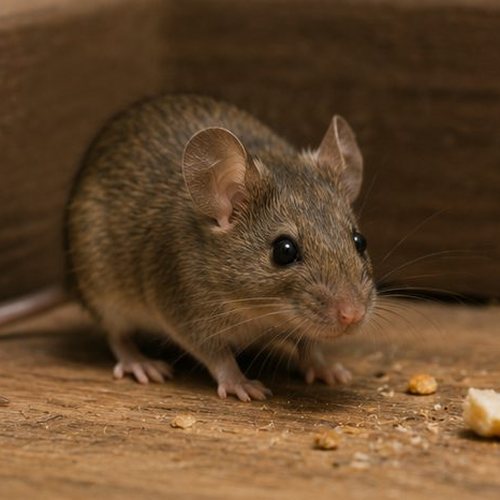
Anything a mouse could have reached in soft packaging should go: cereal boxes, bread bags, open packets of rice or pasta, pet food sacks. If you can see gnawing, there is no debate. If you cannot, but there are droppings on the same shelf, bin it anyway. It is not worth the gamble.
Tins, jars and sealed bottles can be kept once their outsides are washed. Plates, pans and cutlery that were in a contaminated cupboard need a hot wash before use. From then on, keep dry food in hard lidded containers, which removes most of what drew the mice to that cupboard in the first place.
Smells That Will Not Shift
A musty, ammonia-like smell is mouse urine, and it builds up where they have been living or running for a while. Cleaning the surfaces you can reach helps, but the smell often comes from places you cannot: behind the kitchen units, under the bath panel or under the floorboards.
A different, sharper smell that arrives suddenly during treatment is usually a dead mouse in a void. We will tell you honestly that this can linger for a while, sometimes a couple of weeks, until the body dries out. Where it can be reached, it is worth removing; where it is under a floor or inside a wall, ventilation and time are often the only answer.
If you or anyone in the house feels unwell after cleaning up after mice, speak to a pharmacist or your GP and tell them about the mice. If a pet may have eaten something it should not, ring your vet at once.