
Why It Matters Which One You Have

Mice and rats are both rodents and both unwelcome, but they behave differently. Mice live close to their food, explore in small movements and can squeeze through tiny gaps. Rats range further, often come in from drains or burrows outside, and need larger openings. The treatment, where it goes and the proofing that follows are not the same.
Getting it right also saves money and worry. A house with a few mice behind the kitchen units is a different job from rats under the floor, and knowing which you have makes the first conversation much more useful. In a town where people move house often, new occupants may also be hearing and finding things for the first time and have no idea what is normal for the building.
Droppings: The Clearest Clue
Droppings are the most reliable way to tell the two apart, because they are left in quantity along regular routes.
- Mouse droppings are small, dark and about the size of a grain of rice, with pointed ends. They are scattered, often many in one place, along skirting, in cupboards and behind appliances.
- Rat droppings are much larger, thicker and blunter, easy to tell apart once you have seen both.
- Fresh droppings of either are soft and dark; old ones dry out and crumble. Fresh ones mean current activity.
The one thing to do: look at the size of the droppings. Rice-grain sized and pointed means mice. Noticeably larger means rats. Most doubt ends there.
What You Hear at Night
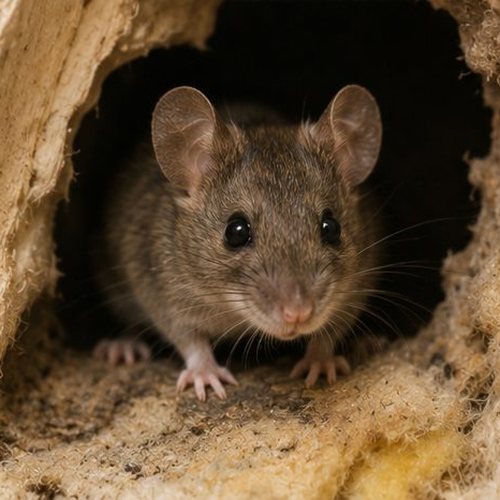
Both are most active after dark. Mice tend to make light, quick scratching and scurrying sounds in ceilings, walls and under floors, often in short bursts. Rats are heavier and the sounds are louder: thumping, dragging or gnawing that can sound surprisingly large. Noise alone is not always conclusive, since a single mouse in a ceiling void can sound bigger than it is.
What those sounds in the walls and ceilings mean, and what else might be making them, is covered in scratching noises in your walls or loft.
Damage, Holes and Other Signs
- Gnawing: mice leave small, neat nibbles on packaging, food, wood and cables. Rats leave larger, rougher gnaw marks and can chew through harder materials.
- Holes: a mouse hole is small, about the width of a pencil or a little more. Rat holes are noticeably bigger, and rats often burrow in gardens, under sheds and beside paths.
- Smell: both leave a musty, ammonia-like smell, stronger with rats in larger numbers.
- Grease marks: both leave dark smears along regular runs, but rat smears are wider and heavier.
- Sightings: a mouse is small, with large ears and a thin tail about as long as its body. A rat is much bigger, with a heavier body and a thick tail.
A fuller checklist of mouse signs is in what are the signs of mice in your home.
If It Turns Out to Be Rats
If the droppings are large, there are burrows outside or the noises are heavy, it is likely to be rats, and our rat control section covers that. A guide to telling rats apart in more detail is at how to identify rats.
If it is mice, mice control is a fixed £260, confirmed with you before anything is booked, and what the treatment involves, including the visits and any proofing, is explained at that stage. If you are still unsure, describe what you have found when you ring and the survey will confirm it.