
What Mice in the Loft Look and Sound Like
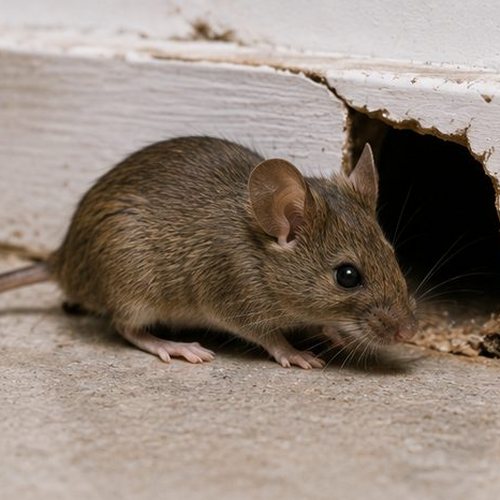
Most people notice a loft problem by ear before they see anything. Light, quick scratching and scurrying after dark, moving across the ceiling and stopping suddenly, is typical of mice. Heavier thumping, or noise mainly in the early morning, can point to something else: squirrels are a common alternative in a roof space.
When you go up, look along the edges where the roof meets the floor of the loft, around the water tank, beside the hatch and on top of stored boxes. You are looking for small, rice-grain droppings, shredded paper or insulation pulled into a nest, and gnawing on cardboard, stored bags or cable sheathing. Rats in a loft leave much larger droppings and heavier damage; if that is what you find, the rat control section covers it.
How They Get Up There
Mice rarely get into a loft through the loft itself. They climb up from inside the walls, following cavities, service pipes and the gaps round soil stacks, or they come in at roof level through gaps at the eaves, under loose ridge or verge tiles, through damaged soffits and round the point where a satellite or aerial cable goes through. A climbing plant against the wall makes a ladder.
Older cottages and houses with timber, thatch or complicated roof lines have more of these junctions than a plain modern roof. That is part of why a roof space in and around Hungerford can take some tracing, and why it is worth checking the outside of the roof as well as the inside.
Insulation, Wiring and the Things Stored Up There
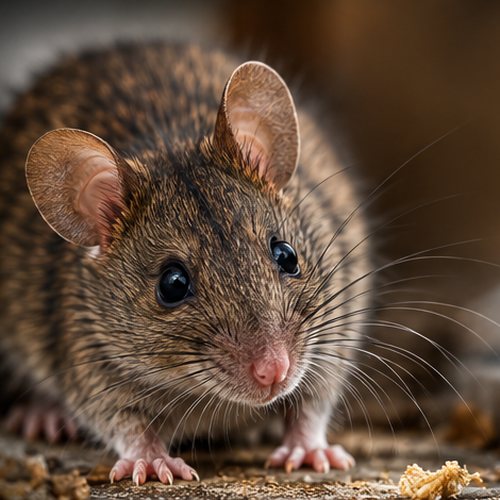
Loose mineral wool and blown insulation make good nesting material, and mice tunnel through it. The insulation then does its job less well, and it needs replacing where it is heavily soiled with droppings and urine. Wear gloves and a dust mask if you have to move it.
The part that matters most is the wiring. Mice gnaw constantly, and cable sheathing in a loft is easy to reach and undisturbed. Gnawed cable can be a fire risk.
Check the cables. If you find gnawed wiring in the loft, do not touch the exposed wire. Switch off that circuit if you can do so safely, and have an electrician look at it.
Stored Christmas decorations, old clothes, books and boxes are all nesting material. Keeping things in hard lidded plastic boxes rather than cardboard gives mice far less to use, and makes droppings easy to spot.
Treating a Roof Space
In a loft the treatment goes where the mice run: along the eaves, beside the tank and next to where pipes and cables come up through the ceiling. Traps are set against the joists and walls on their routes; any rodenticide goes in locked, tamper-resistant stations. Tell us at booking about children, pets or anyone vulnerable in the house, especially if the loft is used as a playroom or for storage people visit often.
The price is a fixed £260, confirmed before anything is booked. What the treatment involves, including the visits and any proofing of the roof space, is explained to you before booking.