
Living Next to the Countryside
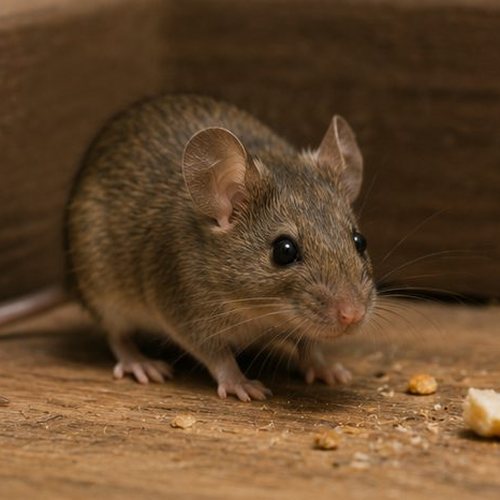
In a town, mice usually come from a neighbour or a nearby garden. Out in the country the source is all around you. Field margins, hedgerows and woodland hold healthy populations, and the house is simply the warmest, driest building in reach. That pressure is always there, not just in a bad year.
Two kinds are likely. The house mouse is almost always the one living indoors. Wood mice, larger-eyed and bigger-eared, come in from gardens and fields as well, and are much more common in rural and edge-of-village homes. Treatment is similar, but it helps to know which you are seeing.
Feed Stores, Stables and Outbuildings
Outbuildings are often where the problem really starts. A shed holding sacks of chicken layers, horse feed, bird seed or dog biscuits is a larder with no lock. Mice chew straight through paper and plastic sacks, and a feed store alone can support enough of them to spread to the house.
- Keep all animal feed in metal bins with tight lids, not in the sack it came in.
- Sweep up spilled feed after every fill, particularly round hoppers and hay nets.
- Store logs and garden materials away from the house walls.
- Keep stables, tack rooms and garages tidy enough that nesting spots are easy to spot.
- Check stored furniture, bedding and cardboard for shredded nests.
Poultry feed and spilled grain also attract rats. If the droppings are large or you have seen burrows, see our rat control pages rather than this one.
The priority in a rural home: you cannot empty the fields, so the aim is to make the house hard to enter and the feed impossible to reach. Treatment clears what is inside; keeping them out is what makes it last.
Treatment Where Other Animals Live
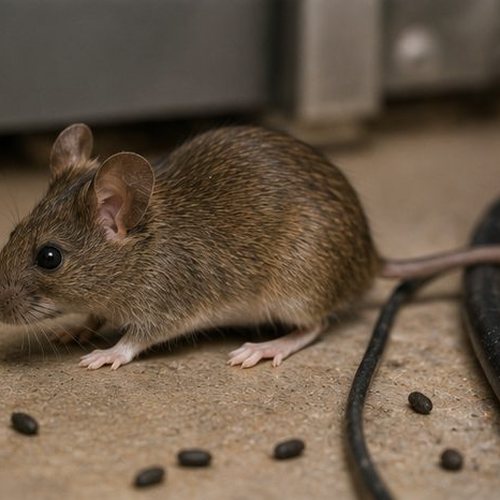
A property with livestock, poultry, working dogs, cats and wildlife all around needs careful placement. Bait only ever goes into locked, tamper-resistant stations, fixed in position, and traps are set inside covers or voids where only mice can reach them. Tell us at booking about every animal on the property, and about children and anyone vulnerable in the household.
If an animal may have eaten bait, the vet needs to know at once. Follow the instructions you are given on the day about keeping animals out of treated areas.
Why It Can Come Back, and What Helps
With a steady supply of mice just outside, a missed gap or a feed bin left open shows up quickly. If it does return, working out the reason is covered in our article on why mice keep coming back, and the sealing materials that hold up in older country walls are in our proofing guide.
The price for a home near Pangbourne is a fixed £260, confirmed before booking. What the treatment involves, including visits and any proofing, is explained to you before you book.