
The Kitchen Nobody Sees
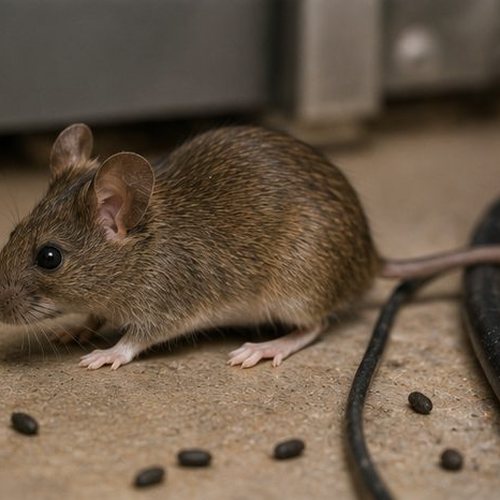
Behind the fitted units there is usually a gap against the wall, and under them a void hidden by the plinth, the strip of board along the floor. Pipes for water, waste and gas come through the wall into that space, often through holes cut larger than the pipe. Together they make a sheltered corridor that runs the length of the kitchen.
Mice rarely live in the open kitchen. They live in that corridor, come out at night to feed, and go back. The droppings you find in a cupboard or on a worktop are the edge of where they are, not the middle of it.
Behind and Under the Appliances
Fridges, freezers and cookers are warm, and the motor housing of a fridge or freezer gives off steady heat that mice like to nest near. Dishwashers and washing machines add water and a gap in the units where pipes come through. Crumbs, spilled pet food and bits of packaging collect beneath all of them.
- Pull out the cooker and fridge, carefully, and look at the floor and wall behind them.
- Check the back of the cupboard under the sink, where pipes pass through the wall.
- Look at the corners of the plinth for gnawed edges or droppings pushed against it.
- Check around the boiler if it is in a kitchen cupboard.
The one thing to check first: the gap where pipes enter behind the units, usually under the sink. It is the most common way into a kitchen, and it is completely hidden by the cupboards in front of it.
Food, Cupboards and What Mice Will Eat
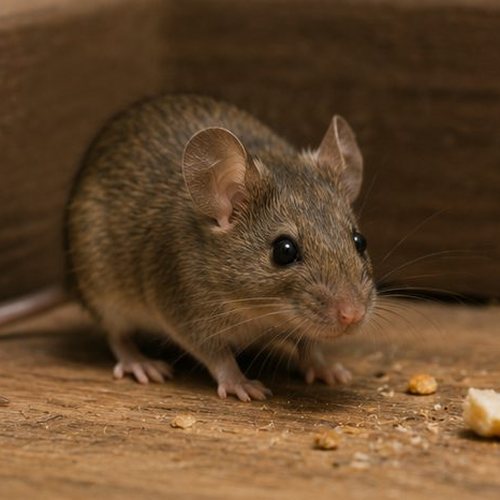
Mice eat little and often, and they explore widely, so they find anything reachable. Cardboard and paper packaging, bread bags and open packets of cereal, rice, pasta, biscuits and pet food are all easy for them. They will also take crumbs from a toaster or from the floor under a table.
- Move dry food into glass jars, tins or hard plastic tubs with tight lids.
- Keep pet food and bird seed in sealed containers, not the bag.
- Do not leave pet bowls down overnight.
- Empty the bin daily and keep a lid on it.
- Throw away anything that has been gnawed or has droppings near it.
None of that removes the mice, but it makes the bait stations or traps their best meal, which is what makes treatment work. The wider list of things around a home that draw mice in is in what attracts mice into your home.
Where Treatment Goes in a Kitchen
In a kitchen, treatment is placed in the hidden spaces, not on worktops. That usually means stations or traps set under the units behind a removed plinth, behind appliances, or at the back of the sink cupboard, where mice run and where people, children and pets cannot reach. Rodenticide goes only in locked, tamper-resistant stations, and it is worth telling us about any children, pets or vulnerable people at home when you book.
Mice control is a fixed £260, confirmed with you before anything is booked. What the treatment involves, including the visits and any proofing, is explained before you commit.
Cleaning the Kitchen Afterwards
Droppings and urine contaminate surfaces, so food areas need a proper clean once the mice are dealt with. Do not sweep or vacuum dry droppings, which raises dust. How to clean up safely is set out on the Woodley page, and why it matters for health is in are mice dangerous to your health.