
Warmth and Shelter Come First

People tend to assume food is the draw. Often it is the building itself. A house is dry, it stays above freezing, and it is full of dark, undisturbed spaces a mouse can move through without being seen: the void under a suspended floor, the gap behind a kitchen plinth, boxed-in pipework, the space between a ceiling and the floor above.
The warmest of those spaces are the most attractive. Around a boiler, behind a fridge where the motor gives off heat, beside a hot water cylinder in an airing cupboard, under a bath. If you have ever wondered why droppings turn up in the airing cupboard before anywhere else, that is the reason.
Colder weather sharpens all of this, and there is a separate page on why mice move indoors when it turns cold. But a warm, sheltered building is attractive in July too.
Food, Inside and Out
Mice eat small amounts often and are not fussy. They do not need a larder left open; they need crumbs, spills and anything in packaging they can chew. The usual sources across a whole property are:
- Pet food. Bowls left down overnight, and open sacks of dry food in a utility room or garage. This is one of the most reliable attractants there is.
- Bird seed. Spill under a feeder feeds mice as well as birds, and a bag of seed stored in a shed is a stockpile.
- Bins. Kitchen caddies without lids, black bags left beside the bin rather than in it, and wheelie bins with a lid that no longer closes.
- Compost. A heap that takes cooked food, bread or fruit peel is warm and fed at the same time.
- Crumbs behind appliances. The strip under the cooker and the gap beside the fridge collect food nobody sees.
- Stored food. Cereal, flour, rice, sugar and dog biscuits in card or thin plastic, in any cupboard or garage shelf.
The kitchen deserves its own close look — cupboards, kickboards and the space under units — and that is covered in detail on the page about mice in the kitchen.
Nesting Material
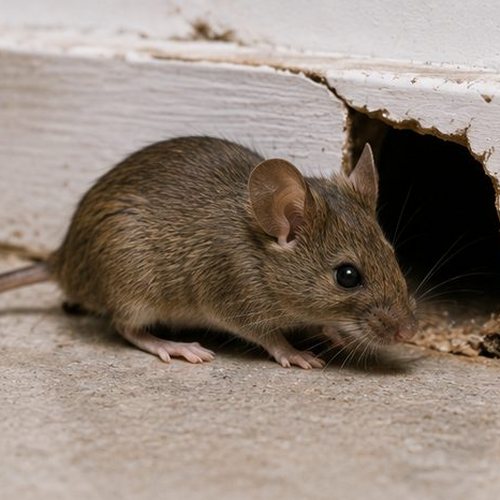
A mouse builds a nest from anything soft it can shred. Loft insulation is the obvious one, and a nest in the loft is often made from the loft itself. Beyond that: newspaper and cardboard, stored bedding and curtains, old clothes in bags, the stuffing of garden cushions, dryer lint and paper towels.
A nest needs to be near food and water but not in the open. A box of old fabric in a quiet corner of the garage, a few feet from a sack of bird seed, is close to ideal.
Clutter and Storage
Clutter matters because mice prefer to move along edges and under cover. A clear floor with a wall running round it is a route they will use but not linger on. Boxes stacked against a wall, a garage full of stored furniture or a cupboard under the stairs packed to the ceiling gives them cover to move, nest and feed without ever crossing open ground.
Storage that is rarely disturbed is the worst of it. Lofts, garages, sheds and spare-room cupboards can host mice for weeks before anyone opens them. Plastic crates with clipped lids are a real improvement on cardboard boxes for the same reason.
Take away the food before anything else. You cannot make a house less warm, but you can make it much less rewarding. Pet food lifted at night, seed and dry food in sealed tubs, and the gap behind the cooker cleaned out will do more than any single deterrent you can buy.
What Removing Attractants Does and Does Not Do
Taking away food and clutter makes a property far less appealing and makes treatment work better, because bait is competing with less. It will not, on its own, remove mice that are already living in the building. They will simply range further for what they need.
It also does nothing about how they are getting in. Attractants explain why a mouse wants to be inside; the gaps explain how it manages it, and the routes in are a separate list worth working through. If you already have droppings or gnawing, ring 0118 336 1366 and we can talk it through.