
Why They Almost Never Leave

A mouse moves in because the building gives it what it needs. Nothing about that changes once it has settled. The food is still there, the voids are still warm, and there is no predator behind the kitchen units. From the mouse's point of view there is no reason to go.
Mice also keep to a small territory once they have one. A house mouse can spend its whole life within a single building, working the same runs along the same skirting every night. That is why droppings keep appearing in the same places: it is not passing through, it lives there.
The exception people sometimes notice is a wood mouse that has wandered in from the garden in autumn. These can and do go back out, but they can also stay, and from droppings alone you cannot tell which you have.
How a Few Become a Colony
The real problem with waiting is breeding. Mice have several litters a year, each of several young, and the young are themselves able to breed within weeks of being born. A pair that arrives in October does not stay a pair through the winter.
What this means in practice is that a problem found early is small and fairly contained — one or two runs, one nest, a handful of droppings. The same problem left for a season is spread through several voids, with nests in more than one place and mice using routes you have not seen.
What Happens If You Leave It
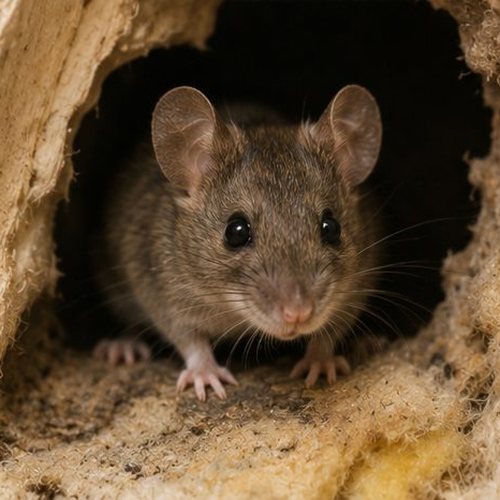
- More droppings, in more places. Along skirting, in cupboards, on worktops, behind the washing machine.
- More damage. Gnawed packaging becomes gnawed door edges, plastic pipe lagging and cable sheathing. Chewed wiring is a fire risk, not just a nuisance.
- More contamination. Droppings and urine on food and surfaces, and a smell that settles into cupboards.
- A longer, harder treatment. More mice across more of the building takes longer to bring down, and more of them end up dying out of reach in voids.
None of that happens overnight, which is part of why waiting feels reasonable. It happens over weeks, quietly, in the parts of the house you do not look at.
Waiting is the one approach that reliably makes it bigger. A small problem found early is the smallest and quickest version of this job you will ever get.
When One Mouse Really Is One Mouse
It does happen. A mouse carried in with a delivery box or a bag of logs, or one that came through an open back door and has nowhere to go, may be the only one. The signs of that are narrow: a single sighting, no droppings anywhere else, no gnawing, no noise at night, and nothing new over the following week or two.
If you are in that position, one or two snap traps set against the wall where you saw it is a sensible first step. If you catch one and nothing more turns up, that may be the end of it. If you catch one and the droppings carry on, it was not the only one. What shop traps and poison can and cannot do is covered properly on the page on DIY treatment.
What to Do Instead of Waiting
Work out how big it is first. Look along the skirting in the kitchen, in the backs of low cupboards, behind appliances and in the loft for droppings, and check the other signs. Droppings in one spot is a different situation from droppings in three rooms and the loft.
Then lift the food: pet bowls at night, dry goods in sealed tubs. If the signs are spread or keep appearing, a treatment is a fixed £260, confirmed before anything is booked, and what it involves, including visits and any proofing, is explained first. Ring 0118 336 1366.