
How Mice Reach the Roof Space
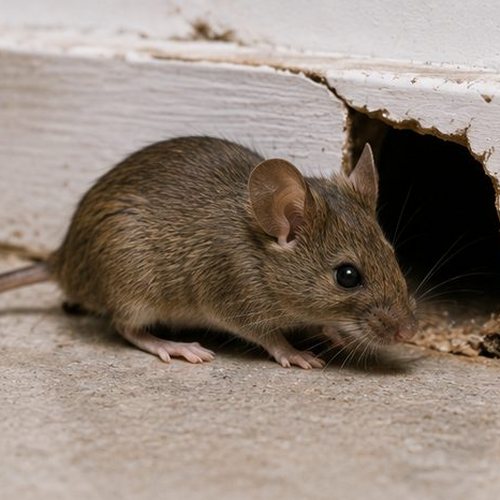
Mice are good climbers. Brickwork, rough render, drainpipes, cables and trellis all give them a way up, and a gap at the eaves, where a pipe or cable enters the loft, or round a vent is enough to get in. Once inside, an undisturbed roof space is warm, dry and dark, which is exactly what they look for.
In a terraced house the picture is bigger. Roof spaces over a terrace are often open or only partly divided, so mice can pass along several houses without leaving the roof. That is one reason treating a single home can fall short, as our professional mice control in Slough page explains.
Cavity Walls as a Route
A cavity wall is a continuous gap between two layers of brick, and in many houses it runs from the foundations to the roof line. Anything that opens into it gives mice a way in: a damaged air brick, a gap round a pipe or cable, or a hole where a vent was fitted.
From inside the cavity they can reach the loft, or come out through gaps round sockets, pipes and cables into rooms. That is why noise can seem to move around, and why the place you hear it is not always where they entered.
What They Damage
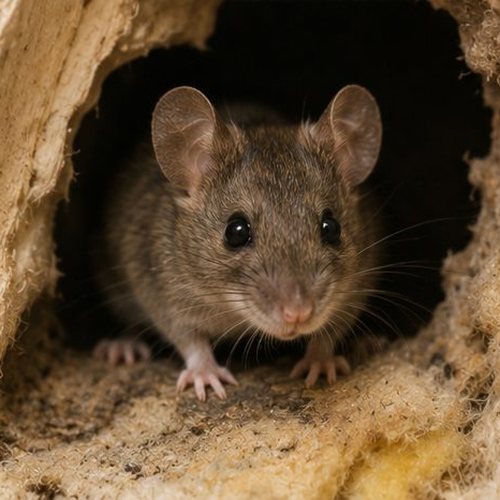
- Insulation. They shred it for nests and flatten it into tunnels, which cuts its value as insulation and soils it with droppings and urine.
- Wiring. Mice gnaw constantly. Chewed cable insulation is a real fire risk, and it should be looked at by a qualified electrician, not left.
- Stored items. Cardboard boxes, fabric, papers and holiday decorations make good nesting material.
- Pipes and tank lids. Gnawing on plastic can create leaks or give access to water.
Droppings in a loft are not just a mess. Our guide to whether mice are dangerous to your health covers the real risks, and how to clear droppings safely covers how to deal with them.
Looking Safely
A quick look through the hatch with a torch is fine. Do not step between the joists, because the ceiling below will not bear your weight, and wear a mask and gloves if you go in. Check for:
- Droppings along the edges of boards and the tops of walls.
- Shredded or flattened insulation and balls of nesting material.
- Chewed cables, and holes at the eaves where light shows through.
- Tooth marks on boxes and stored items.
Noise during the day, or heavy thumping, may be something other than a mouse. Squirrels are covered by our squirrel control pages and rats by our rat control pages.
How We Deal With It
The survey covers the outside as well as the loft: the eaves, the places where services enter and the air bricks. Stations and traps go along the runs we can reach safely, such as the loft and the ground-level entrances, rather than by opening up walls. Activity tails off over days to weeks, and it gets checked rather than assumed.
Gaps are closed once the mice have been dealt with, not before. Soiled insulation, damaged wiring and broken air bricks are building matters for you, your landlord or a tradesperson, and we tell you what we find. Mice control in Slough is a fixed £280 per property, confirmed before booking, with the detail in the Slough cost guide.